
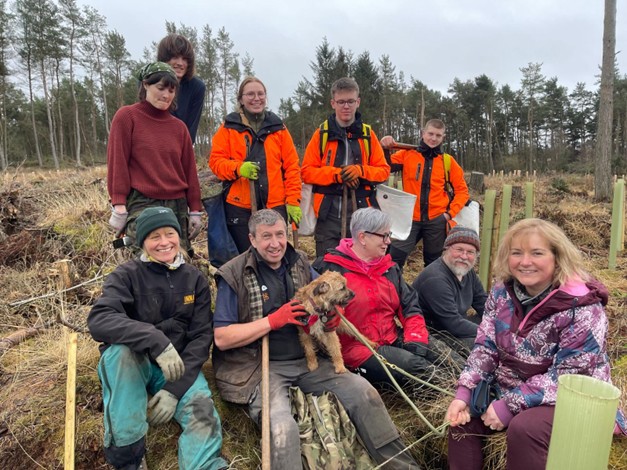
Dronley Community Woodland is a 50-hectare woodland in Angus, just outside Dundee. It’s a well-used local space, attracting more than 20,000 visitors each year, from walkers and cyclists to horse riders and families. Since becoming community owned in 2019, it has been managed as a multipurpose woodland where biodiversity, recreation and timber production sit alongside each other.
What makes Dronley distinct is its role as Scotland’s only climate education woodland. In practice, this means the site is not just being adapted to climate change, but is actively used to demonstrate how that adaptation can happen on the ground. Through hands-on management, volunteering and learning, it offers a space where people can see and take part in climate resilience in action.
The woodland is managed using Continuous Cover Forestry, an approach that avoids clear felling and instead works with natural processes to support soil health, biodiversity and long-term resilience. The work is delivered by a small part-time team alongside around 20 dedicated local volunteers, with support from community members and Auchterhouse Primary School.
Climate adaptation is central to everything happening at Dronley. Located in an area already experiencing more frequent storms, drought and ecological pressures, the woodland is being actively reshaped to better withstand a changing climate while continuing to support people, wildlife and local livelihoods.
Climate impacts in focus
The impacts of climate change are already being felt at Dronley.
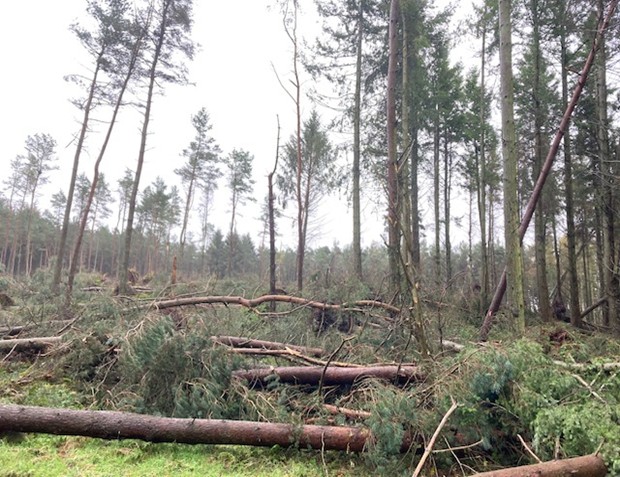
Storms including Arwen (2021), Babet (2023), and other recent extreme weather events have caused significant damage, with more than 1,300 trees lost to windblow. These events are not isolated. They are part of a wider pattern of increasingly unstable weather, combining intense rainfall with longer dry periods that place growing stress on the woodland ecosystem.
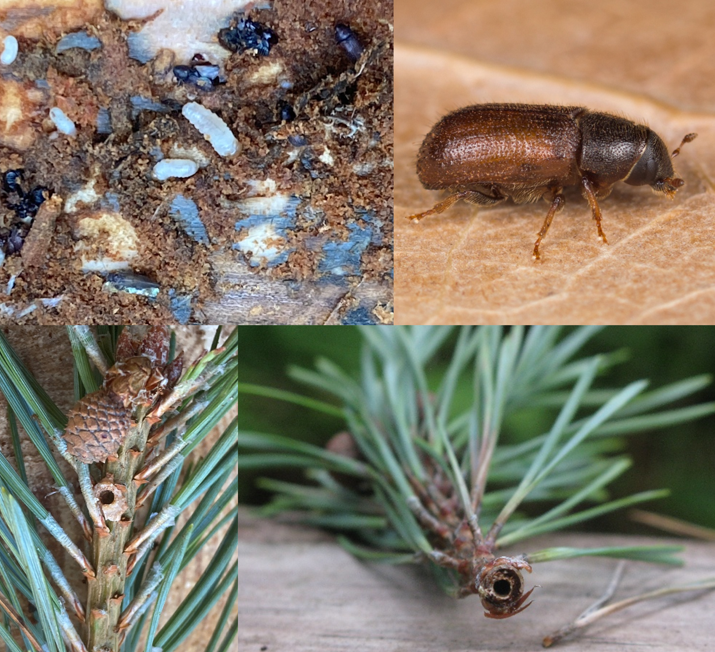
These pressures are made worse by the structure of traditional forestry. Even-aged, single-species plantations are more vulnerable to storms, drought and pests. At Dronley, storm damage has contributed to an increase in pine shoot beetle, a pest that weakens Scots pine by damaging new growth and reducing tree health over time.
There are also practical impacts. Fallen timber creates safety risks and can limit access to the woodland, affecting its role as a community space. Clearing up storm damage is dangerous and resource-intensive work.
Clear felling, often used in response to damage, can make things worse in the long term. It releases stored carbon from soils, reduces biodiversity and disrupts water regulation, with impacts that can last for decades. In this context, adapting how the woodland is managed is not optional, it is essential.
Working with nature
At Dronley, the response has been to work with natural processes rather than against them.
Continuous Cover Forestry allows the woodland to remain intact while gradually improving its structure and resilience. Instead of large-scale felling, the forest is carefully thinned. Weaker or damaged trees are removed, creating space for stronger “frame trees” to develop. These are supported through natural regeneration, direct seeding and underplanting.
Over the past year, more than 3,500 trees have been planted. These are site-adapted and climate-resilient broadleaved species, introduced to increase biodiversity, improve soil health and strengthen the woodland’s structure. Planting has focused on areas damaged by storms, as well as underplanting existing Scots pine stands and strengthening woodland edges.
Specific approaches include coppice with standards, a traditional method used to strengthen woodland edges and improve biodiversity, and the introduction of species such as sweet chestnut, which are better suited to future climate conditions. In storm-damaged areas, cluster planting is being used alongside natural regeneration to reduce future risk and encourage a more diverse woodland structure.
Natural processes are also actively supported. For example, jay trays filled with acorns encourage birds to play a role in regeneration. A single jay can bury thousands of acorns each year, many of which go on to germinate and establish new trees.
Together, these actions are creating a more diverse, multi-layered woodland that is better able to withstand storms, drought, pests and disease.
Community-led action
A defining feature of Dronley is the role of the community.
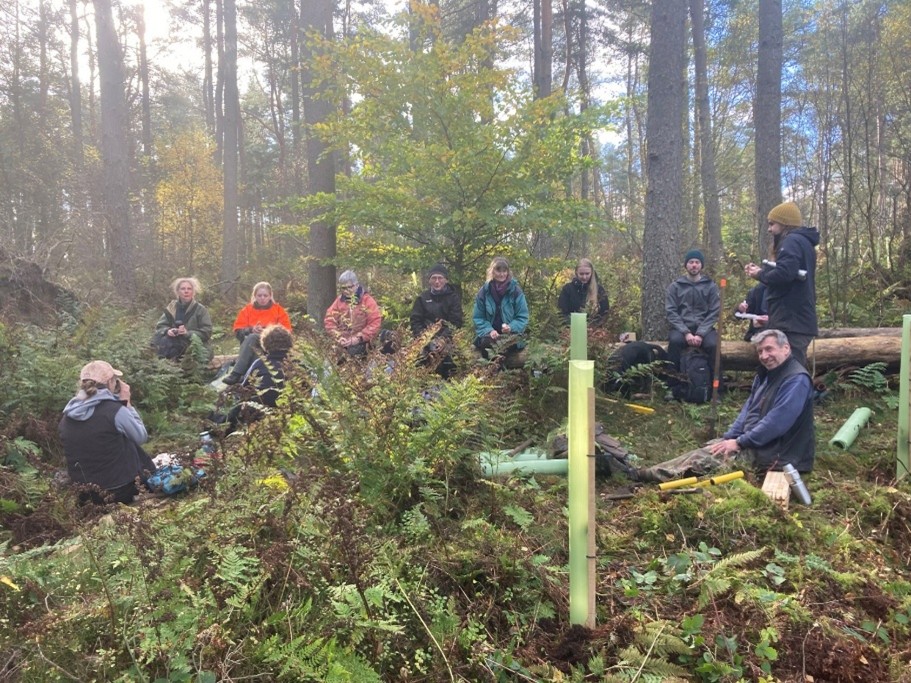
Around 20 volunteers have contributed thousands of hours to planting, mapping, weeding, fencing and maintaining the woodland. Forestry apprentices and students are also involved, gaining practical experience while contributing to the transformation of the site.
Local schools, including Auchterhouse Primary, are part of the project, helping connect young people directly with climate action in their local environment. This hands-on involvement is central to Dronley’s role as a climate education woodland, making climate resilience something people can see, understand and take part in.
The woodland supports five part-time jobs and continues to provide a space for recreation, learning and community activity. It also shares learning more widely through site visits, workshops, talks and demonstration areas, offering inspiration and practical insight for other woodland owners and managers.
Outcomes and learning
The transformation of Dronley is already delivering visible results.
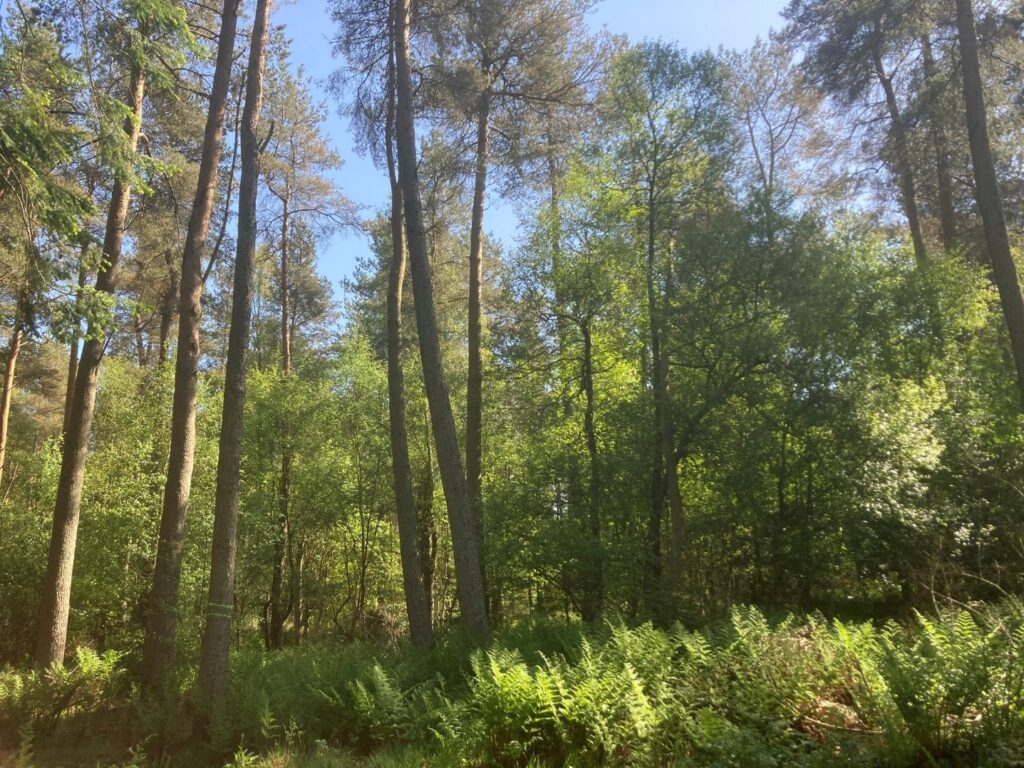
There is a clear increase in tree species diversity and structural diversity across the woodland. Soil health is improving, biodiversity is increasing, and the woodland is becoming more stable and better adapted to local conditions. These changes are strengthening the woodland’s ability to absorb, store and manage water, while continuing to provide habitat and recreational value.
At the same time, the project is demonstrating what is possible. The work at Dronley is being shared through conferences, discussions and wider sector engagement, attracting interest from across Scotland and beyond.
There are challenges. Climate impacts are accelerating, and current policy and funding frameworks do not always support this type of long-term, adaptive management. The need to restructure woodlands for resilience is not always reflected in existing approaches, and there is a growing need for more joined-up thinking across policy areas.
However, Dronley shows that a different approach is possible. By working with natural processes and involving local people, the woodland is becoming more resilient while continuing to deliver social, environmental and economic value.
Looking ahead
Dronley Community Woodland is an ongoing project, shaped by continuous learning and adaptation.
As climate pressures increase, the focus will remain on strengthening resilience, expanding species diversity and continuing to share learning with others. There is also a clear need for stronger policy support and a more coordinated approach to managing climate risks across landscapes.
At its core, Dronley is a powerful example of what community-led, nature-based adaptation can achieve. It shows how woodlands can be managed not just to withstand climate change, but to evolve and thrive within it, while bringing people along as part of that journey.